In a nutshell
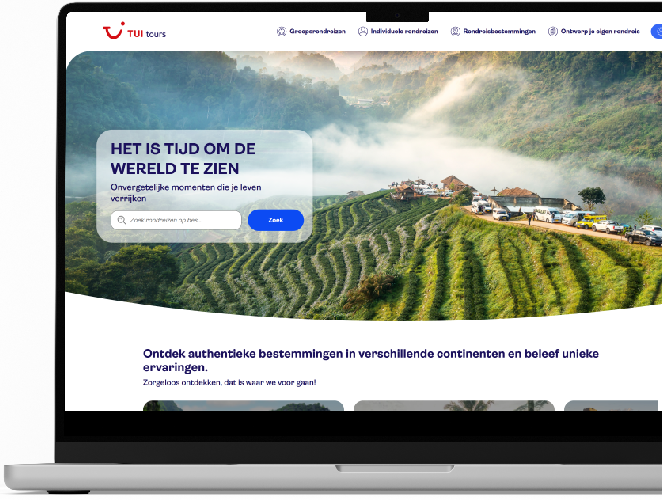
This website migrated in Dec ’22: new domain, new platform, new URL structure. Due to the lack of an SEO migration, SEO traffic collapsed. Fast forward: 6 months later, I became involved in this project. A comprehensive recovery plan was drawn up, and today this website has twice the SEO traffic it had pre-migration. An interesting success case, with one big learning. Even 6 months later, it is possible to rectify a failed SEO migration.
First: The numbers
This website’s SEO traffic dropped to almost zero after a migration gone wrong. This happened in Dec 2022.
As you can see, we’re starting off with pretty much zero clicks on the x-axis. That’s because the migration involved a domain change as well. The new domain didn’t pick up at all. I didn’t think to take a screenshot of the old GSC numbers, but that would’ve showed even clearer how traffic fell off a cliff.
Note: I’m showing the non-brand traffic here, which is what we as SEOs focus on most, given that brand SEO traffic is mostly driven by brand awareness (and above-the-line marketing).

I was involved in the project in late May 2023 (6 months after the disaster), the first actions started in June 2023.
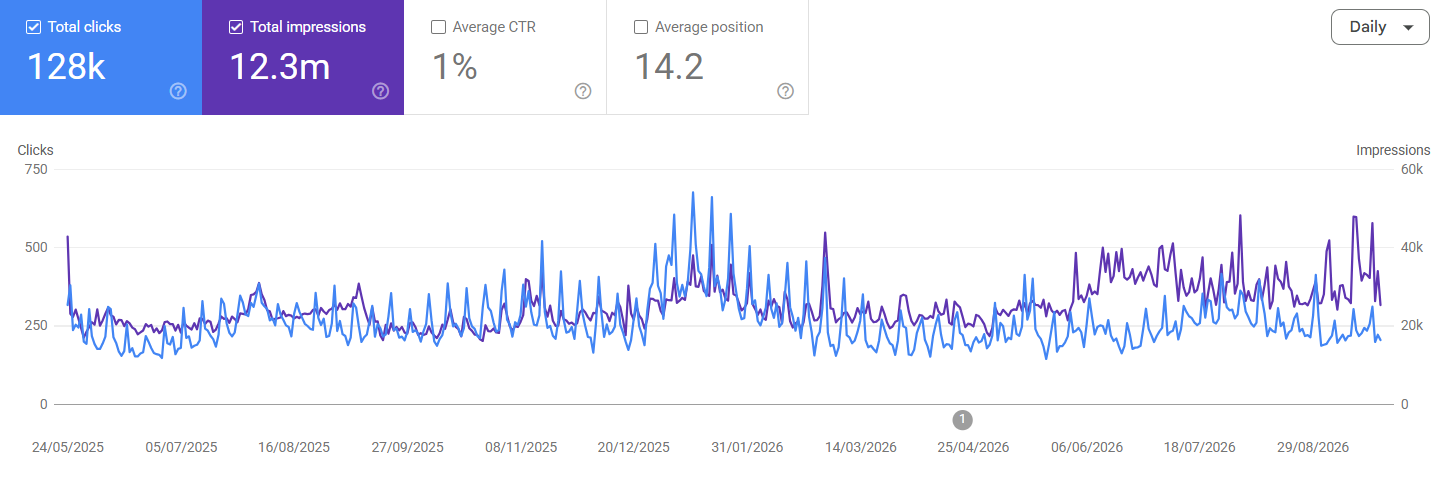
After recovery, SEO traffic grew higher than what the old website had. In fact, in 2024 and beyond there was sustainable higher SEO traffic than before. Even in 2026, after AI search has basically melted away 30 to 60% of SEO traffic in some industries, this website has about double the non-brand SEO traffic it had in 2024.

This is a more recent screenshot of the same traffic (non-brand SEO) chart in 2026 (16 months of data, just as before). On average there are now 270 daily clicks (non-brand) vs 105 daily clicks on the old website.
So what happened in this failed migration?
- ❌ Mistake 1: Literally zero 1:1 redirects were implemented. As a result no historic value (SEO equity) – despite having strong signals – was carried over to the new website.
- ❌ Mistake 2: The catch-all redirect sent every old URL to the homepage of the new domain via HTTP 302 (instead of a proper HTTP 301 status code). This indicates to search engines that the page is moved temporarily, not permanently, and hence it signals that Google shouldn’t carry over the existing quality signals.
- ❌ Mistake 3: There were no dedicated SEO landing pages. Let alone relevant texts for the customer/searcher.
- ❌ Mistake 4: Old, valuable links (“backlinks”) from external websites were ignored. That value was lost.
What actions were taken?
- ✔️ Fixed: Correct 1:1 mapping between all old and new pages. This helped enormously. The website quickly regained some Google top 3 positions – which is the area in the SERP were you’ll get meaningful SEO traffic. This number continued to rise gradually.
- ✔️ Fixed: Catch-all 302 redirect changed for a 301 status redirect. I noticed an uptake in positions almost immediately – within a couple of days. (*)
- ✔️ Fixed: We created landing pages for important historical keywords / search intents. We provided them with concise, yet helpful text copy for the customer.
- ✔️ Fixed: All pages with backlinks were mapped out and 301 redirected to the correct page on the new website.
So as mentioned, in parallel with the redirect exercise we improved content. Specifically, we added helpful content on the main landing pages to indicate better what the page was about. I must stress here that the pages have a predominant commercial intent – not informational. Therefore the focus was on the products. We had about 5 – 10 sentences of text copy added on any of the landing pages.
Later (starting October 2023) – when traffic had already started picking up again, we increased our landing pages to target keywords/search intents we weren’t targeting before. This explains in part why we were able to surpass (read: double) the old traffic level, however even existing landing pages recovered beyond their baseline level.
(*) This was surprising because according to Google, an HTTP 302 redirect will in the long term be interpreted as if it were a 301 redirect.
What do we learn from this project?
You would think that after 6 months of a failed web migration with proper redirects, all hope for a recovery (and historic SEO equity) would be lost. So always remember:
Even after 6 months it is still not too late to fix a failed SEO migration with proper 1:1 redirects, a 301 status code and better content.